
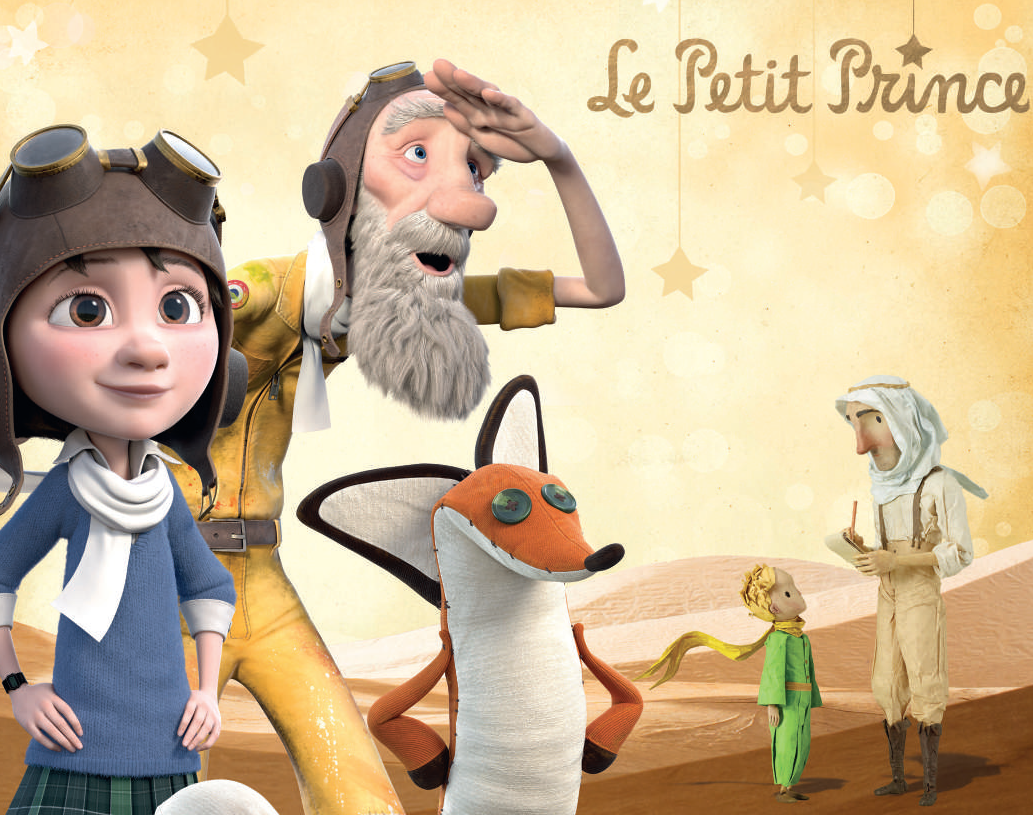
 In terms of its impact on cinema, The Little Prince may well have been named The Little Engine That Could. From “The Aviator” to “The Lego Movie” and “The English Patient,” this children’s book about the interplanetary travels of a solitary boy on a solitary asteroid has been influencing films since its release in 1943 – the year before its author, Antoine de Saint-Exupéry, disappeared in a fighter plane. Inspired by his crash in the Sahara Desert during an international flight race, the story was always tinged with melancholy about the collateral damage of growing up.
But the writer and aviator may not have anticipated how this collateral damage could extend to the adaptation of his book, which has been butchered in such far-ranging forms as an anime series and a 1974 Hollywood musical. (To be fair, that latter project is at least a fascinating disaster, listing no less than Bob Fosse in its credits.) While a new, computer stop-motion animation adaptation by Mark Osborne (“Kung Fu Panda”) is actually good, even its trajectory has been fraught. Premiering at the 2015 Cannes Festival, it was delayed for U.S. release and dropped by a distributor before finally landing in the happy home of Netflix Studios, which is releasing it on a streaming platform as well as in theaters this month. Something about the purity of this story – of the prince’s clear little voice and features – has seemed to confound Hollywood, which, though itself founded on no shortage of childlike imagination, has a hard time embracing simplicity, let alone sidestepping bombast. But Osbourne and his team have devised a take that’s quite ingenious. Continue Reading →
 Yesterday was all about the moon.
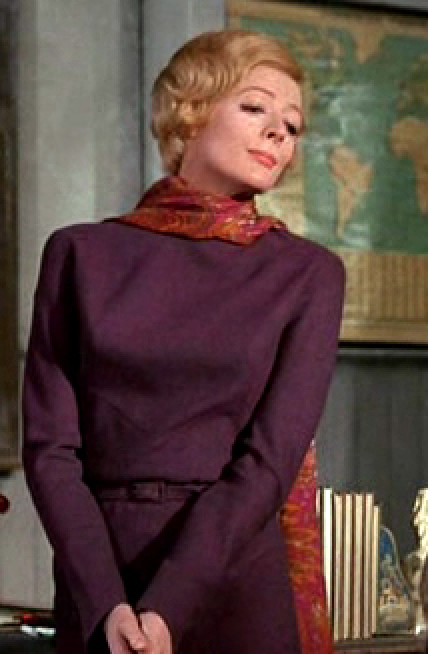 If ever there were a book that wouldn’t be adapted today, it’s The Prime of Miss Jean Brodie. About a 1930s Scottish teacher who pimped out her students to a colleague and favored fascism, it hardly jibes with today’s helicopter parenting and political orthodox–not to mention any ethical compass. Yet it’s arguably Muriel Spark’s best novel and certainly her most touted. As slim as it is crisp – technically, it could be described as a novella – it began its long life as a 1961 segment in The New Yorker before being published as a separate book. In 1968, it was adapted into an eponymous and much-celebrated play by Jay Presson Allen, who went on to write the screenplay for the iconic 1969 film starring Dame Maggie Smith as Miss Jean Brodie. Said Allen: “All the women who played Brodie got whatever prize was going around at that time.” In fact, Zoe Caldwell nabbed a Tony for her portrayal in the theater production, and Smith won a subsequent Oscar.