 We denizens of the 21st century sometimes forget history isn’t as linear as chronological time – at least in terms of the progression of civil rights. We tend to believe, for example, that women have it better now than ever before. Certainly we assume females wield more political clout in this day and age. After all, just look at Hillary Clinton or Elizabeth Warren or, um, Sarah Palin. Right?
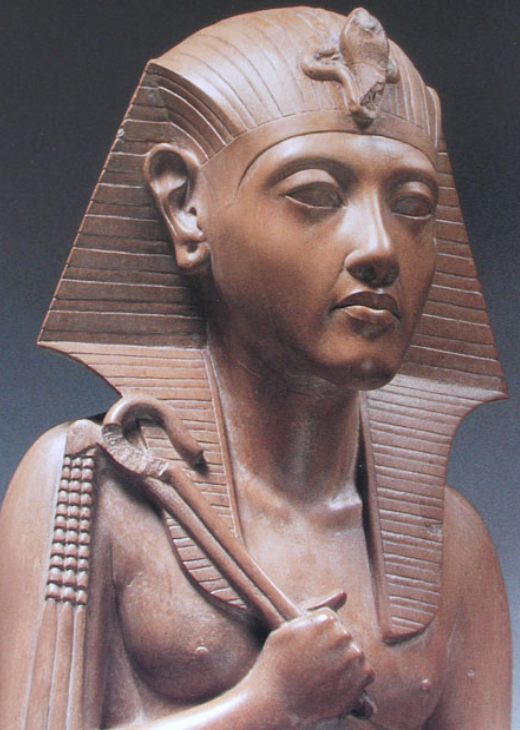
Wrong. The most radically powerful female leader to date may be a woman who ruled Egypt more than 3,000 years ago with very little fanfare and less ill happenstance. I’m not talking about Cleopatra, whose reign was as troubled as it is fabled. (Mostly she used her great sexuality in an ill-fated attempt to save her country from mass servitude.) I’m talking about Hatshepsut, who ruled Egypt for twenty years (practically a millennium in 1500 century BC) and who went so far as to refer to herself as a “female king” rather than a queen, which then connoted the head wife of a male pharaoh.
Hatshepsut is widely accepted to have led her nation into its most prosperous and peaceful era. Yet this is not a woman we learn about in school. Frankly, were it not for Egyptologist Kara Cooney’s new biography, The Woman Who Would Be King: Hatshepsut’s Rise to Power in Ancient Egypt, I still would not have heard of her. “Hatshepsut has the misfortune to be antiquity’s female leader who did everything right, which may be what dooms her to obscurity,” writes Cooney, who goes on to suggest history prefers to emphasize women who mishandled their power. In other words, is it any surprise that we hear about Cleopatra rather than Hatshepsut?
It’s time to rectify this glaring omission. Arguably, history is backsliding again – reproductive rights are being repealed; young female activists have been forced to reinitiate an anti-date rape movement; and the nation seems collectively confused about the very definition of “feminism.” A big Hollywood biopic about a charismatic female leader – a woman of color, no less – could put things in perspective. The good news is that, despite the fact that history hasn’t been interested in Hatshepsut, she is very interesting, with all the makings of a timeless yet terrifically relevant epic. In fact, the biggest challenge of an adaptation of The Woman Who Would Be King wouldn’t be jazzing up this story for modern consumption. It’d be sidestepping an NC-17 rating, and finding a contemporary woman with enough grandeur to do justice to this overlooked pioneer.
Consider the possible movie treatment. Continue Reading →

 It’s hard to pinpoint the exact appeal of Shailene Woodley. Is it her throaty voice? Her eyes, piercing yet gentle? Those endless limbs, that defiant jaw? That slightly hippy-dippy honesty? Whatever it is, the twenty-two year-old can seemingly do no wrong. She’s terrific in such serious dramas as “The Spectacular Now” and “The Descendants”; she’s terrific in this year’s big-studio smashes “Divergent” and “The Fault in Our Stars.” But perhaps the true test of her potentially Julia Roberts-level stardom is whether she can carry off mediocre material. In the off-puttingly atonal “White Bird in a Blizzard,” the answer is: sort of.