
Archive | Book Matters

Swoony and Sincere: ‘Brooklyn’

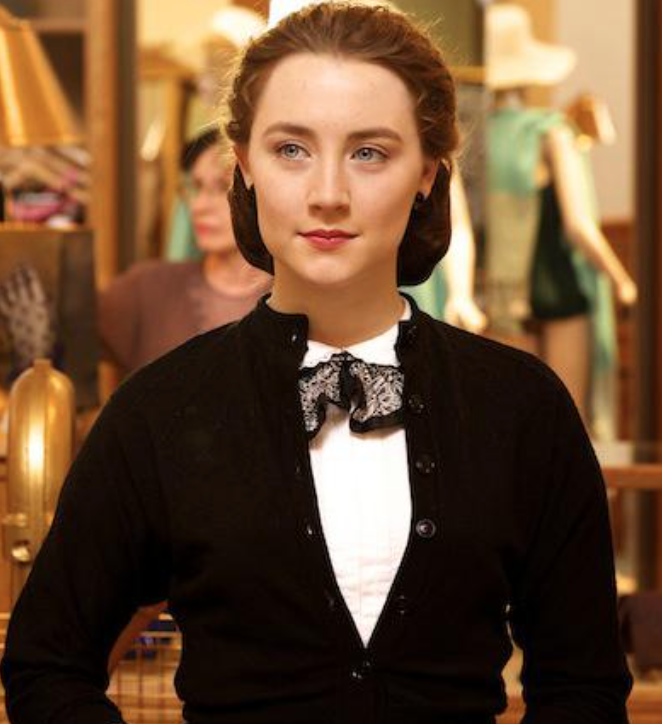
Colm Tóibín’s Brooklyn (2010) is a lovely novel. About Eilis, a 1950s Irish girl who moves to America but feels the pull of her homeland, it offers gently powerful insights about the complexity of the immigration experience. Restrained and wonderfully quiet, this is just the sort of novel that doesn’t translate well to the big screen. Yet “Brooklyn,” written by bad-boy author Nick Hornby and directed by John Crowley, is an equally lovely film, one that captures all the nuance of its antecedent without resorting to the clichés that can doom period adaptations. There’s not even a voiceover.

Saoirse Ronan stars, and it’s her best performance to date, which is really saying something. Since the beginning of her career, the twenty-one-year-old Irish actress has summoned a clear-eyed gravity that has worked equally well in bad-ass YA sagas (“Hanna,” “How We Live Now”) as in Oscar-baiting epics (“Atonement,” “The Lovely Bones”). Eilis is one of her first grown-up roles, and rather than succumbing to the self-consciousness that typically afflicts former child actors, she channels her new adulthood – sometimes peacocky, sometimes clumsy – as if it’s just another tool of her corporeal instrument. Such physicality is handy in this exceptionally nonverbal story, in which most people say the opposite of what they are feeling, if they say anything at all. (Not for nothing did Freud declare the Irish the only people impervious to psychoanalysis.) Continue Reading →
Razzle-Dazzle Redshirts: ‘Trumbo’

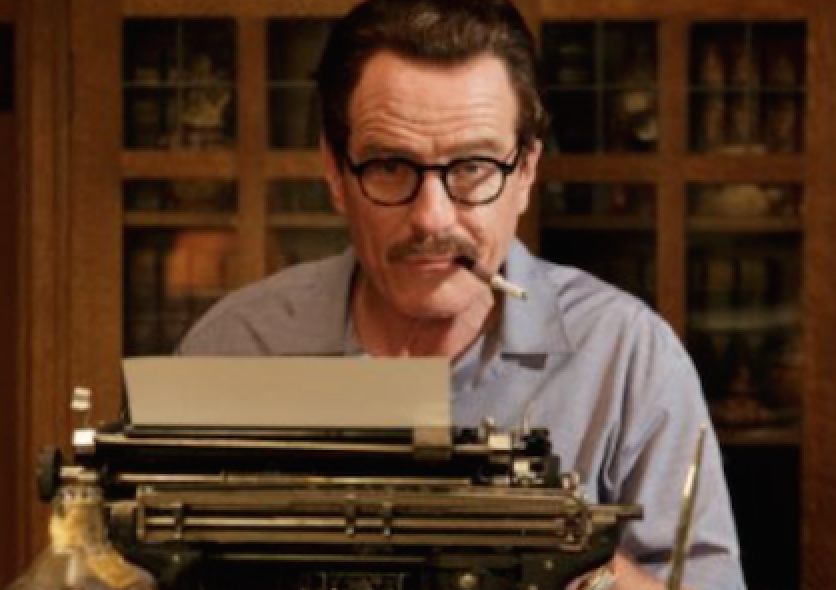
Dalton Trumbo may not be well-known today but at the height of the Hollywood Red Scare he was a household name. The author of the National Book Award-winning novel Johnny Got His Gun (1939), he was a former war correspondent who, in the 1940s, became one of the country’s highest-paid screenwriters. (Credits include “Spartacus” and “Exodus.”) He was also an outspoken member of the American Communist Party, which raised the hackles of the Joseph McCarthy-led House Un-American Activities Committee (HUAC) during the 1947 investigation of Communist influences in the motion picture industry. Trumbo soon became one of the “Hollywood Ten” – a group of screenwriters and filmmakers who, upon refusing to testify in Congress, served one-year prison sentences and were subsequently blacklisted for more than a decade from working for any movie studio. Still, he won two Academy Awards while blacklisted – one was originally given to a front writer, and the other was awarded to “Robert Rich,” Trumbo’s pseudonym – and, after the ban was lifted in 1960, received official credit for both: “Roman Holiday” and “The Brave One.” He died at age seventy, a vindicated man.

Trumbo’s story is one of the few Hollywood tales that actually deserves to be made into a movie (though many more are), and “Trumbo,” directed by Jay Roach and adapted by John McNamara from Bruce Cook’s biography, is duly a study in Tinseltown razzle-dazzle, complete with gorgeous costumes and set designs, original film footage, zinging one-liners, and enough hokum to hurt our teeth even as we’re pumping our fists in the air. Bryan Cranston stars, and it’s his first endeavor since “Breaking Bad” that makes good use of his character-actor charisma in a leading role. When he’s not playing for the cheap seats with big, meaty speeches, he’s writing in bathtubs with cigarette holders clamped between his teeth and glass tumblers of scotch by his side; the succession of his shiny manual typewriters is enough to make us long for Hollywood’s golden era, warts and all. Continue Reading →

The Truth About ‘Truth’

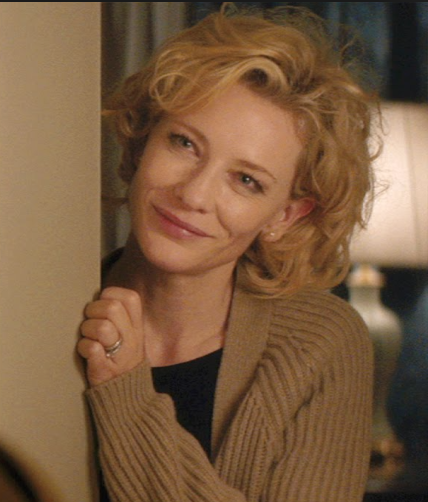
“Truth,” like everything connected to former CBS news producer Mary Mapes these days, has been awash in controversy since its release. About the notorious “60 Minutes II” segment on President George W. Bush’s Texas Air National Guard service, it focuses on the accusations of document forgeries that resulted in Mapes’s termination and longtime news anchor Dan Rather’s resignation. Adapted from Mapes’s memoir, Truth and Duty: The Press, the President and the Privilege of Powerthe film takes the firm stance that the news team (all of whom got the sack in one way or another) were unfairly scapegoated by the rabid right and a television network desperately trying to protect its own corporate interests. But as waggish New Yorker critic Anthony Lane wrote, “Call a movie ‘Truth,’ and you’re asking for trouble.”

Even some members of the allegedly liberal media have taken issue with the film’s unwavering conviction in the reporting of the “60 Minutes II” team. “This is one of the worst films about journalism (and there have been plenty of bad ones) to come down the pike in a long while,” fumed Christopher Orr in The Atlantic. “It loudly, hectoringly stresses the importance of always ‘asking questions’ … yet celebrates in its protagonist that she never questions whether her reporting might have been wrong.” The few positive reviews are studies in faint praise. “On its own terms,” wrote New York Magazines David Edelstein, “‘Truth’ works fine … But having a feeling and having proof are different things.” Other critics (like myself) have bigger problems with the ham-handedness – with how characters speechify rather than speak, as if they’re cogs in an especially ardent position paper. (You stop asking questions, that’s when the American people lose!)

Lost in this fervor is the fact that “Truth” may be the most feminist mainstream film of 2015. Continue Reading →

"All, everything I understand, I understand only because I love."
― Leo Tolstoy