
Archive | Film Matters

3 Lady Music Biopics to See Now

Music biopics – both documentaries and narrative features – are a dime a dozen these days. Even if your only claim to fame is cult status as a 1970s folksinger, chances are good someone has made a movie about you. That is, unless you’re a woman. Although 2013’s “Twenty Feet from Stardom” put the spotlight on ladies in music, biopics about female musical artists are still few and far between. For that reason alone, it’s worth checking out these three documentaries about groundbreaking female singers that were released this summer. Happily, there are plenty of other reasons to do so as well.

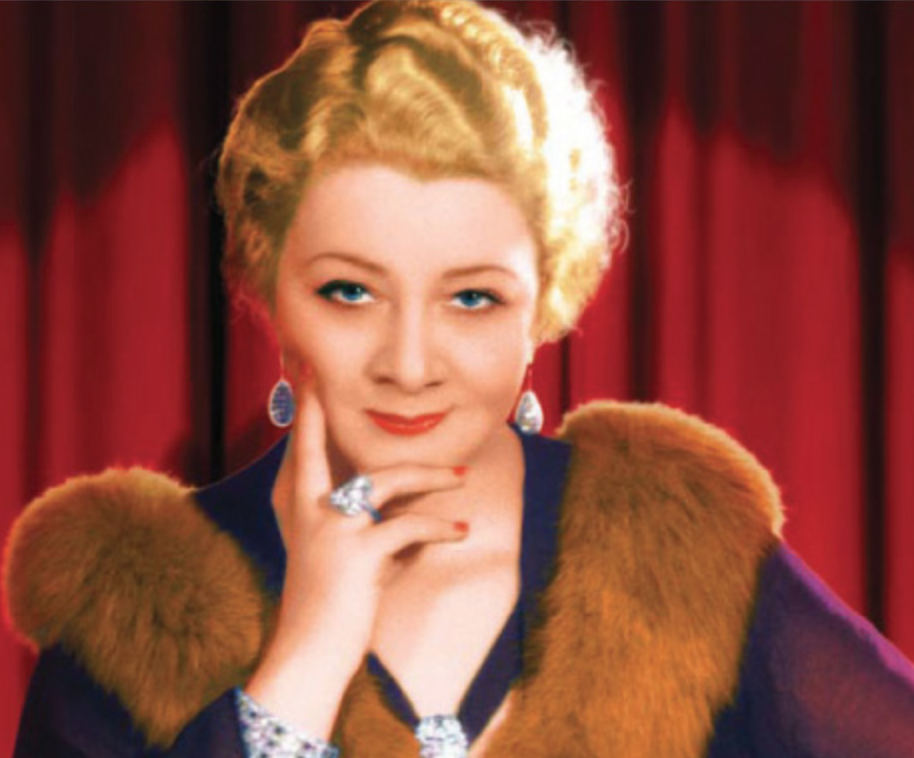
“The Outrageous Sophie Tucker”
Few know who she is these days but in 1962, ninety-two percent of people polled associated the name “Sophie” with “Tucker.” That’s how popular the eponymous singer and comedian used to be in vaudeville, cinema, and television. A Ukrainian Jew who fled a restrictive Orthodox family, she first made her name performing in the Ziegfeld Follies but quickly became known in her own right as a larger-than-life presence in every sense of that term. Through rare footage and interviews with Carol Channing, Paul Anka, Michael Feinstein, Tony Bennett, and Barbara Walters (whose father Lou headlined Tucker in his nightclubs), director William Gazecki paints a portrait of the woman who referred to herself as “the Last of the Red Hot Mamas.” Gazecki’s filmmaking is not especially innovative but this may work in his favor. It’s best to let the details about this pioneering woman speak for themselves: She was a self-marketing genius half a century before Madonna; a fat activist before Ms. Magazine was a twinkle in Gloria Steinem’s eye; an unabashed civil rights advocate, especially when it came to singers like Josephine Baker; a pal to the Kennedys and J. Edgar Hoover (the closeted cross-dresser asked to borrow her spangled gowns); and a highly sexualized being who had three husbands to her name and, this documentary suggests, many female lovers as well. She also was a highly innovative jazz stylist who mentored Mae West and Judy Garland. Bottom line: See this movie to know exactly who you should be thanking, ladies and germs. Continue Reading →
Hilton Als on ‘Voyage Au Congo’

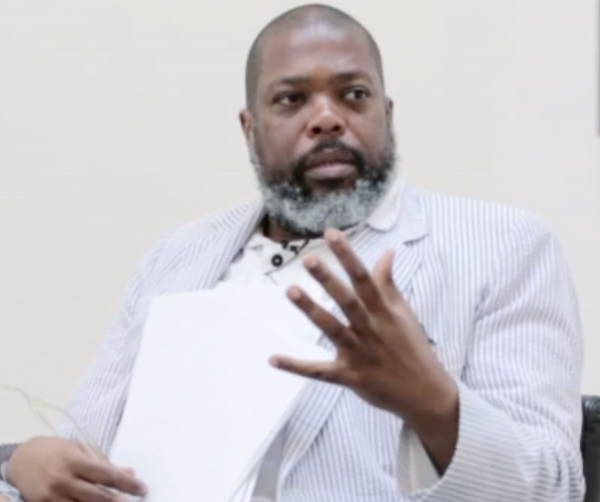
It’s not an overstatement to say Hilton Als is one of the most important cultural critics working today. The theater reviewer for The New Yorker, he also is the author of the essay collections The Women (1996) and White Girls (2013), both highly original takes on the intersection of class, gender, race, and sexuality.

At Brooklyn’s packed Light Industry venue on July 16, he discussed author André Gide’s “Voyage au Congo,” a 1927 silent documentary that examines African “natives” with an appallingly detached curiosity. Als called it out with his characteristic mix of compassion and candor.

“This is a messed-up film,” he began, clad in a seersucker blazer and white bucks that put the resident hipsters to shame. “But it taught me not to look away.” He went on to discuss the abundant nudity in the film: “Gide had a lot of trouble with the black female body,” he said, and acknowledged the many other white male authors who had the same trouble, including poet Arthur Rimbaud. “Even educated people can be rude and ridiculous,” he said, and discussed recent instances in which colleagues and students had made nasty comments about his own physicality. (Als sometimes refers to himself as a “negress.”) “Perhaps this film would best be shown as a double feature with something by [black folksinger] Carole Walker. Perhaps cinema is not the best way to examine how black bodies have been treated.”

But he went on to say it is important that films like “Voyage au Congo” continue to be watched, so long as films made by people “in the margins” are watched as well. “We need to take in this material and change how it fits into our story and our society. As the world changes, this is our right and our responsibility.”

The applause from the usually too-cool-for-school audience was deafening.

‘Irrational Man’ and Woody’s Workaholism

Could it be that Woody Allen just needs a vacation? Every year, he writes and directs a new film, and every year it brings less to the table than its predecessor. Some believe these projects vary in quality — that, say, a “Blue Jasmine” (2013) is superior to last year’s “Magic in the Moonlight” — but to me his body of work has become a study in diminishing returns. A few decades ago, his worst crime (as a filmmaker, anyway) was an “ecstasy of influence” — an unabashed, one-man immersion program in whichever artist held his fancy (usually Ingmar Bergman). These days the Woodman has taken to plagiarizing himself, which is akin to making a carbon copy of a carbon copy. Instead of making his newest, “Irrational Man” — an unfortunate echo of “Crimes and Misdemeanors” — perhaps he should have stopped to smell the roses, if for no other reason than to garner real-life experience for later plundering.

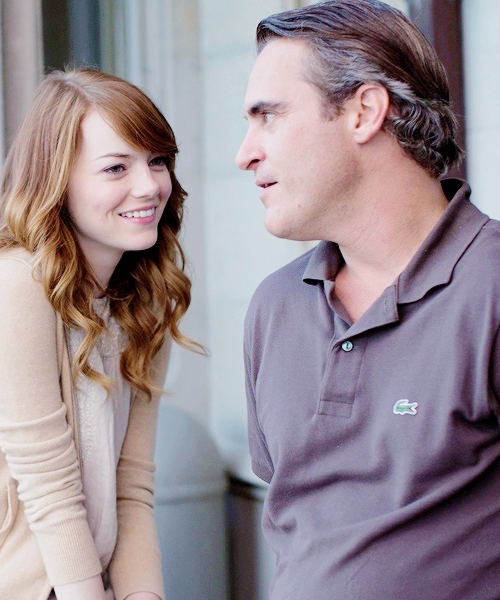
Abe is a hotshot philosophy professor (Jouquin Phoenix) who, drunken and depressive, can’t seem to will himself into caring about anything or anybody — not even the two beauties vying for his attention at the fictional (and highly unrealistic) Newport, Rhode Island university where he’s taken a teaching position. Manic science professor Rita, played by a Parker Posey hilariously unmoored in loose-fitting blouses and darting eyes, seems just what the doctor ordered but Abe is immune to her advances. Ostensibly it’s because he’s too much of a sadsack but we should know by now that couplings between contemporaries over age thirty is like a crime against nature in an Allen film. Abe is tempted by student Jill (Emma Stone), but not even her bright, bi-Cyclops gaze can penetrate his ennui. What works are his plans to kill a corrupt judge. Just strategizing about it gets his blood pumping again, which gets Jill’s blood pumping — at least until she begins to suspect what’s caused his change of heart. It’s too bad our blood doesn’t start pumping, too. Continue Reading →

"All, everything I understand, I understand only because I love."
― Leo Tolstoy