
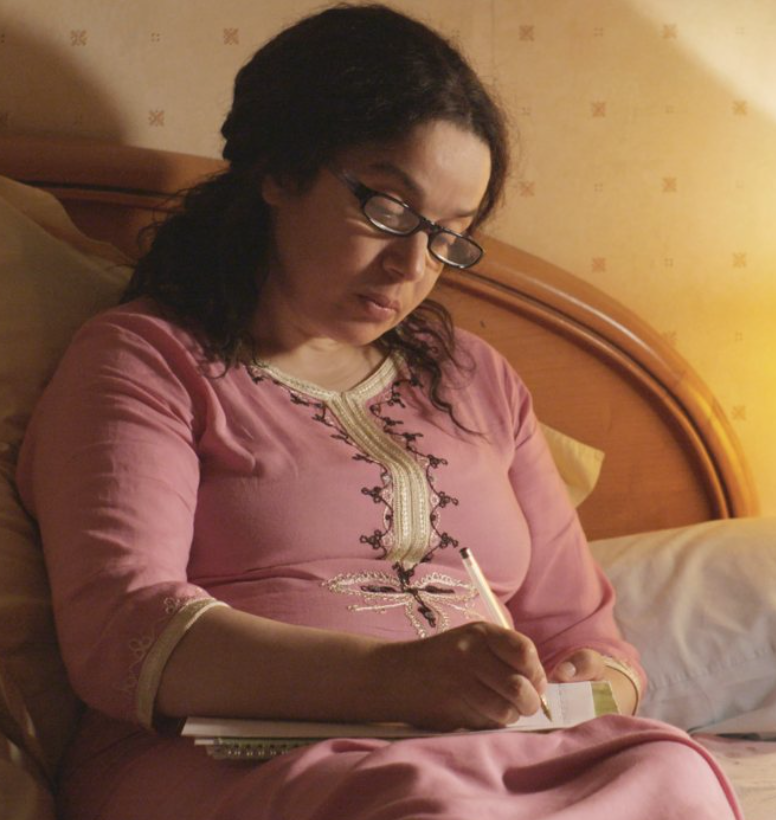
 “Fatima” begins slowly and deliberately, and proceeds that way for its entire seventy-eight minutes, like a mother straightening her child’s room. This is appropriate, for it is about an Algerian cleaning woman struggling to raise her two teenage daughters in Lyon, France. The film is a loose adaptation of Priere a la lune (Prayer to the Moon), a short collection of poems and other writings by Fatima Elayoubi, a North African woman who emigrated to France and taught herself the language. Fatima’s onscreen stand-in is played by the nonprofessional actor Soria Zeroual, who really worked as a cleaning woman until being cast in this film.
At times, Zeroual’s lack of acting experience is all too evident – her high, trailing voice can grate; her motions and features can seem frozen – but soon enough you see what director Philippe Faucon saw in her: an unadulterated steadiness that shores her children – and this film – in the face of all adversity. With her veiled head, stricken expression, and broken French, Fatima encounters micro – and macro – aggression daily, yet remains undeterred as she spends long hours cleaning a local factory and the houses of unhappy, wealthy women. Nothing can sway her from the goal of supporting Nesrine (Zita Hanrot), her eighteen-year-old daughter in medical school, and Souad (Kenza Noah Aiche), her fifteen-year-old daughter who is as surly with her mother as she is with her schoolmates and teachers. Continue Reading →
 “
“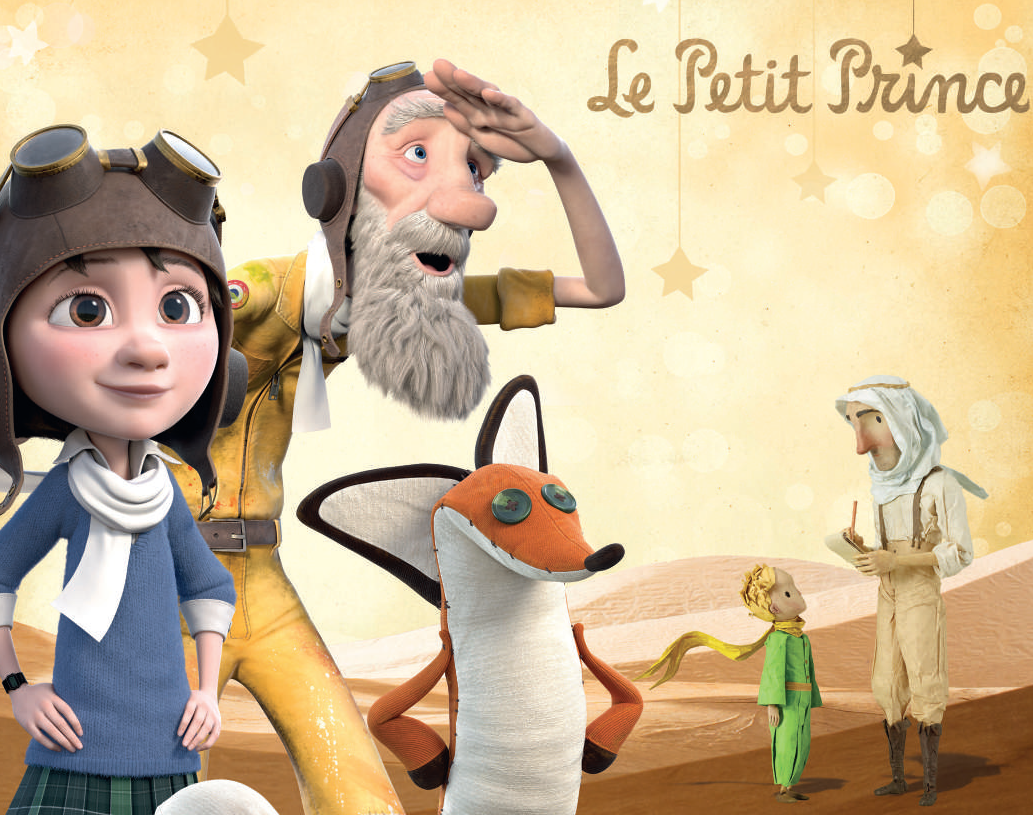 In terms of its impact on cinema, The Little Prince may well have been named The Little Engine That Could. From “The Aviator” to “The Lego Movie” and “The English Patient,” this children’s book about the interplanetary travels of a solitary boy on a solitary asteroid has been influencing films since its release in 1943 – the year before its author, Antoine de Saint-Exupéry, disappeared in a fighter plane. Inspired by his crash in the Sahara Desert during an international flight race, the story was always tinged with melancholy about the collateral damage of growing up.