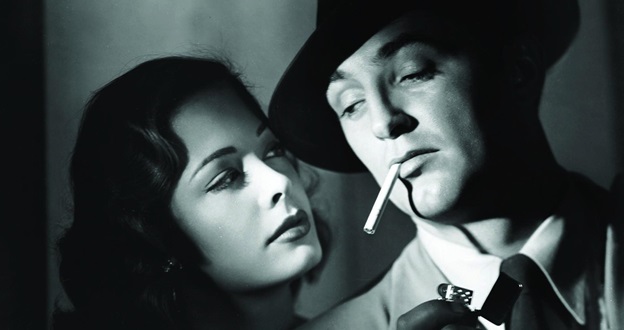
 The days are short. The nights are long. The shadows are even longer. All told, it’s a fantastic time to settle in for a noir marathon – especially if you’re not the sort to swoon over the holiday season. It’s easy to reduce noir to its aesthetics: curling clouds of cigarette smoke, fedoras at rakish angles, shimmying dames, chiaroscuro that looks black and white even when it’s not. But the genre is also defined by what I call “cinennui” – a gloomy, back-door glamour and the sense that, as critic Stephen Whitty puts it, “you’re being directed by destructive forces larger than you.” Roger Ebert wrote that noir was the most American type of cinema because no other society “could have created a world so filled with doom, fate, fear, and betrayal unless it were as essentially naive and optimistic.”
Noir is more of a state of mind than the product of a particular era in history. But for the purpose of this primer, we’ve chosen ten essential examples from the 1940s, arguably the heyday for all doomsday cinema (until recently; hi, new-millennium dystopias). As CNN’s Gene Seymour says, “Pop culture tends to be a decade late in giving full vent to the subconscious of a given time, so 1940s films are a species of no-exit despair more emblematic of the 1930s, when desperate times led desperate people to do really desperate things.” As an interesting sidebar, many of the best examples of this genre are literary adaptations – not surprising given that a sinewy plot is key to any noir worth its salt.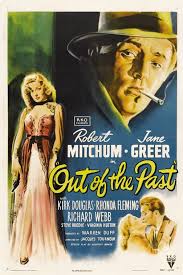
“Out of the Past” (1947)
Almost the platonic essence of noir, Jacques Tourneur’s classic love triangle between a gas station owner (Robert Mitchum), a lantern-jawed gangster (Kirk Douglas), and the girl who got away (Jane Greer) has got it all, baby – and it’s set against the dying sunsets of the American Southwest.
“Force of Evil” (1948)
This adaptation of the Ira Wolfert novel Tucker’s People focuses on two brothers – played by Thomas Gomez and John Garfield – ensnared in the numbers racket and, boy, does it deliver on moral complexity and steely Sturm und Drang. Bonus: a sizzling New York City backdrop. Continue Reading →