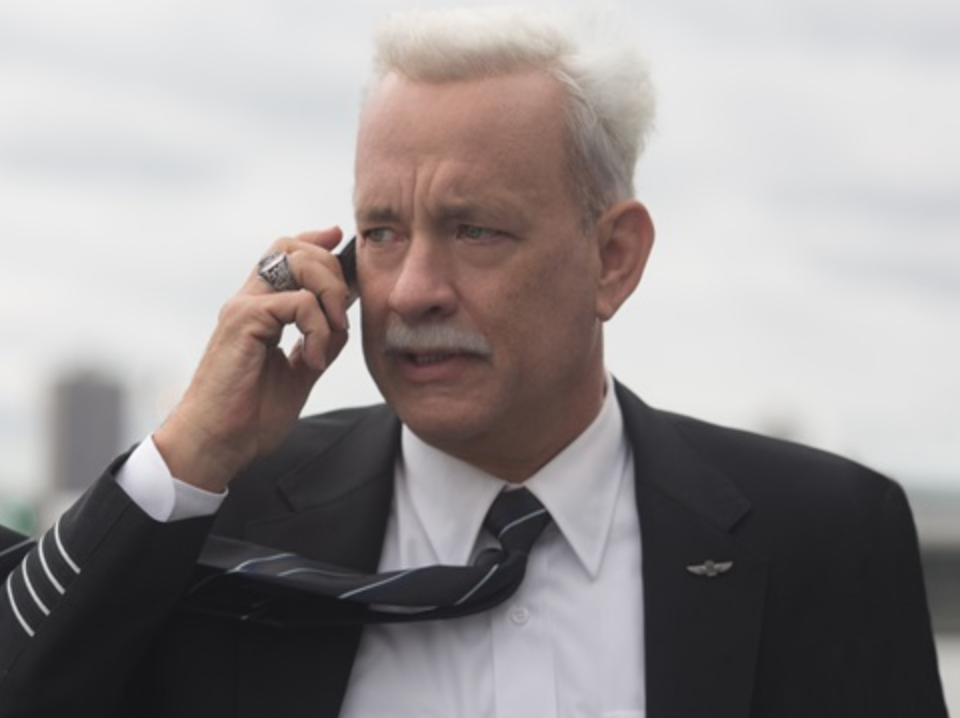
 “Sully” begins with a plane crash – a wobbly, fiery descent right into a Manhattan skyscraper. It’s a nightmare of Captain Chesley “Sully” Sullenberger, who in 2009 saved 155 people by landing U.S. Airways Flight 1549 in the Hudson River, and whose subsequent memoir, Highest Duty, provides the backbone of this film. It’s also a traumatic, what-if reference to September 11, 2001, which makes the timing of this release a mite cynical. In fact, undertaking this film at all is a mite cynical, or at least misguided. Because Captain Sullenberger’s heroics took only 208 seconds, fashioning a full-length feature worthy of it would entail another feat of heroism, and director Clint Eastwood isn’t the right knight for the job, not even with a white-haired, white-mustachioed Tom Hanks at the helm as the titular character.
Working from Todd Komarnicki’s screenplay, Eastwood attempts to build out dramatic tension, not only with that dramatic CGI opener (an echo of the opening sequence in his tsunami clunker, “Hereafter”) and by slowly meting out details of what really happened in the ill-fated flight. The conceit here is that, once the waves calmed on Sully’s save, National Transportation Safety Board investigators questioned whether the flight captain had unnecessarily endangered his passengers’ lives with his emergency water landing.
According to protocol, Sully should have returned to LaGuardia Airport or tried to land at New Jersey’s Teterboro Airport, and both the airline’s insurance company and Sully wrangle with the consequences of his decision. But while zooming in on the pilot’s growing self-doubt and post-traumatic stress adds a much-needed depth to this tale, demonizing the commission feels like a flimsy effort to make a mountain out of a 208-second-long molehill. Continue Reading →