
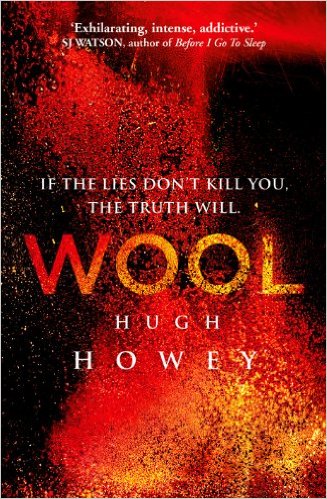
 This summer, it was announced that “Wool,” a dystopia about an underground city on an otherwise-uninhabitable Earth, was finally under way three years after Twentieth Century Fox nabbed the rights to Hugh Howey’s eponymous book. The project now comes with stellar credentials: “Guardians of the Galaxy” screenwriter Nicole Perman is rewriting “The Fifth Wave” director J Blakeson’s original script, and Steven Zaillian (“The Girl with the Dragon Tattoo,” “Moneyball”) and Ridley Scott (“Alien,” “Blade Runner”) are producing. Not bad for a book that got its start as a series of self-published novellas. But that’s the thing about all self-published book adaptations. No matter how they fare at the box office or on Rotten Tomatoes, they qualify as cinema’s Little Engines That Could. The sheer fact that these stories have defeated so many odds – that they made it to the big screen at all given that they initially could not find a niche in the literary world – is amazing. And some of the films in this category may surprise you. Continue Reading →
Archive | Film Matters
All Hail ‘The Hunger Games’
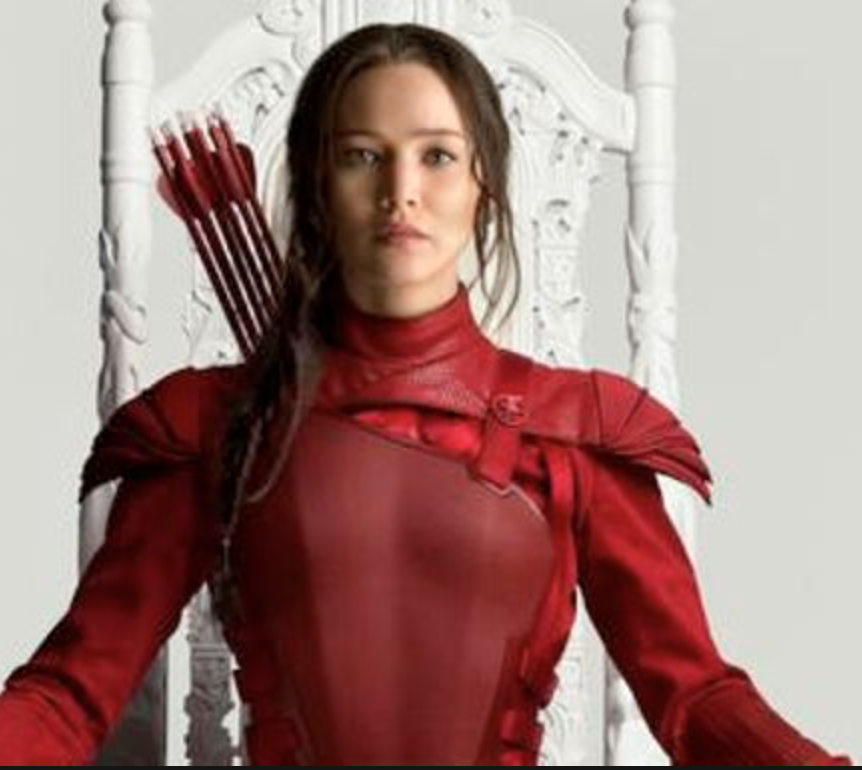 Overall, I like “In a World,” actress Lake Bell’s comedy that indicts sexism in the voice-over industry, but it contains one problematic scene. In it, a studio bigwig played by women’s rights activist Geena Davis critiques a thinly disguised version of “The Hunger Games” films. “Let me level with you,” she says. “This pseudo-feminist, fantasy-tween, chick-lit bullshit is a devolution of the female mission and a cancer to the intelligence of young women.”
As “The Hunger Games: Mockingjay – Part 2,” the final (and hyper-punctuated) installment in the four-film series adapted from Suzanne Collins’s best-selling book trilogy, hits theaters this week, I thought about how much I disagreed with these words. To usurp Bell’s titular phrase, in a world in which young girls – everyone who identifies as female, really – are routinely condescended to and manipulated by popular media, the “Hunger Games” franchise stands out as a shining exception. More than that, it charismatically instructs a new generation (one for whom the activism of the 1960s is but a twinkle in their grandparents’ eyes) that hegemonies can be toppled if we behave courageously and selflessly. Continue Reading →
Fairy Tale, Cautionary Tale: ‘Mustang’
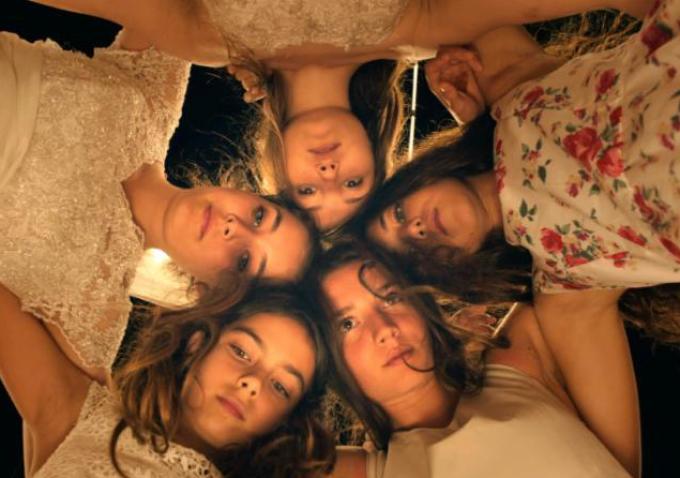 I keep thinking about “Mustang,” which opens this week in limited release. It has been described as a Turkish-Syrian “Virgin Suicides” but that comparison would be much more apt if Sofia Coppola had a penchant for female liberation rather than pink Converse. About a group of orphaned sisters (age 12-16) who are imprisoned in their grandmother’s home after getting caught playing with local boys, this is a horror movie about patriarchy on one level and the fiercest of fairy tales on another. Here is the text of a talk I delivered about it last weekend to the Westchester Cinema Club.
Really it’s impossible to discuss “Mustang” without discussing its director. Deniz Gamze Ergüven is a 37-year old-woman raised in Turkey and France. She identifies as a French film director though, and, indeed, though this is set in Turkey with a Turkish cast and in Turkish language, it is technically a French production. The French woman Alice Winocour is her co-screen-writer, and Ergüven counts among her mentors the legendary French director Olivier Assayas, who’s done such extraordinary films as “Summer Hours” and “Clouds of Sils Maria,” which is one of my favorite films of 2015.
That said, this film is very much inspired by the restrictiveness of Turkish life for women. When Deniz was 10, she had the same experience as the girls—she was caught playing on the shoulders of boys and was severely punished for it. As she’s said in interviews, Turkey was one of the countries to give women the vote; now they can barely get abortions and nearly everything coded as feminine is reduced to a shameful reference to sex. Continue Reading →