
Archive | Film Matters

‘Effie Gray’: An Unlikely Disappointment

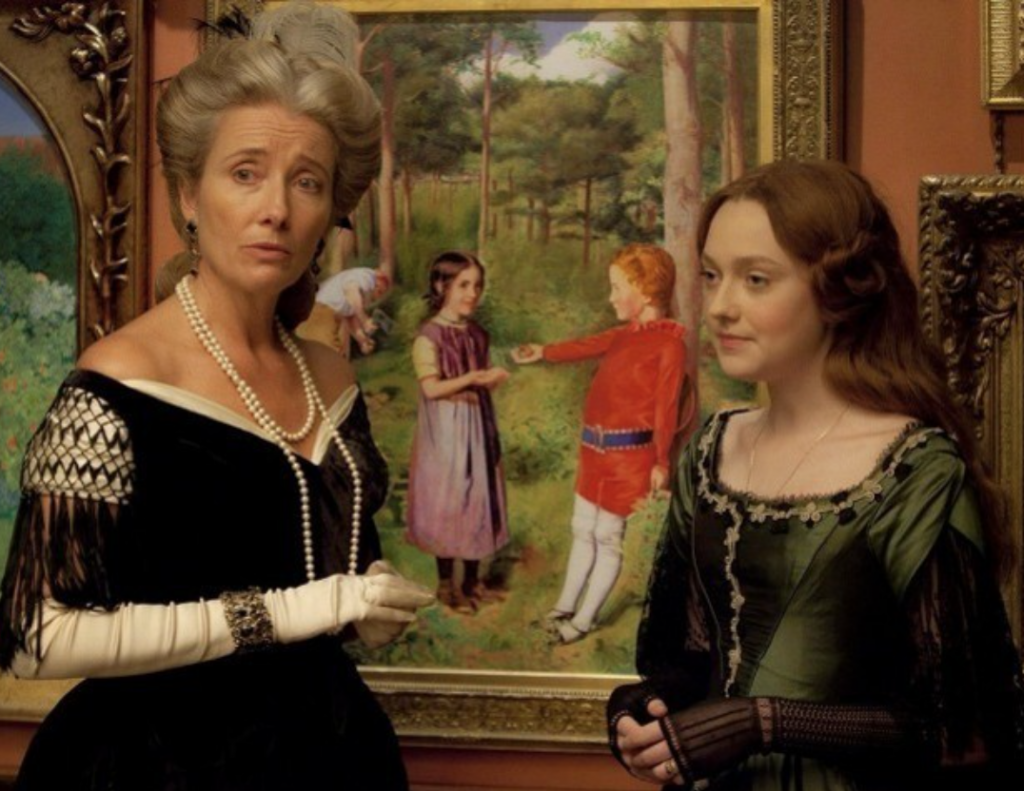
“Effie Gray,” about the young wife of premier Victorian art critic John Ruskin, is an unlikely disappointment. Set against the unfettered backdrop of eighteenth-century Scotland, England, and Venice, it is written by Emma Thompson, who has a proven track record of penning slyly feminist screenplays (“Wit,” “Sense and Sensibility”), and it boasts all the ingredients of a female-empowering bodice-ripper: stifling family dysfunction, sexual liberation, a lurid love triangle. Yet this too-delicate biopic never develops the spine nor sparkle for which its titular character is celebrated.

A woefully miscast Dakota Fanning doesn’t help. Decked out in bosom-baring gowns, a mane of auburn waves, and a faint approximation of a British accent, she plays Euphemia “Effie” Gray, a Scottish lass of modest means who was raised in the house where Ruskin’s grandfather committed suicide. John (Greg Wise, as dour here as the real-life Ruskin appears in portraits) was so besotted that he wrote the novel The King of the Golden River for her when she was twelve years old. Yet when they wed eight years later, their marriage was never consummated for reasons that are still debated today. Continue Reading →
Boxing Helena Rubinstein

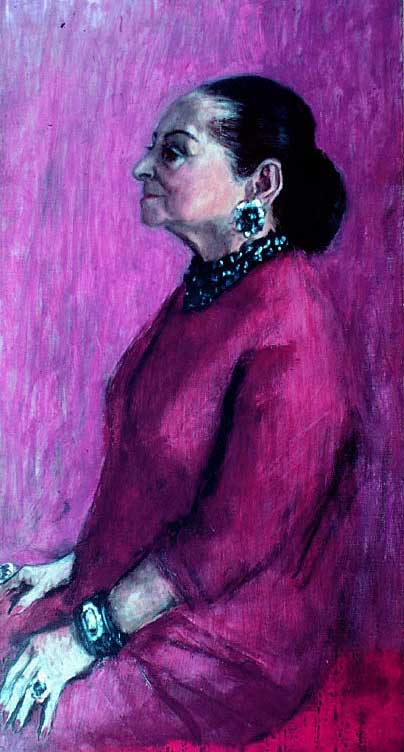
Helena Rubinstein was the world’s first female self-made millionaire. She commissioned portraits from artists ranging from Pablo Picasso to Andy Warhol, and she hobnobbed with the likes of Coco Chanel, Eleanor Roosevelt, Virginia Woolf, Josephine Baker, Audrey Hepburn, Colette, and James Joyce. She was a legendarily generous philanthropist and collector who trumpeted East Asian, South American, and African art decades before her peers, and who took a bag lunch to work every day. She was a four-foot-ten, painfully shy Polish girl from a poor Jewish family who, at age thirty, fled to Australia to avoid an arranged marriage – and went on to marry a bona-fide prince twenty-three years her junior after she’d made her fortune as the first cosmetics magnate. Add in the fact that she popularized bright-red lipstick (a hallowed achievement unto itself), and there are no two ways about it: Helena Rubinstein was one of the most remarkable women of the twentieth century.

Yet, since her death fifty years ago this week (she lived to age ninety-two), Rubinstein’s legacy has faded. Her once-powerful beauty company has changed hands twice and is now an ugly stepchild of L’Oreal. Her salons, once considered glamour incarnate, have closed their doors. Ask a person under forty who she was, and chances are good that they’ll draw a blank. Continue Reading →

‘While We’re Young’ and Other Adventures in Noah Baumbach’s Narcissism

Noah Baumbach is often likened to a Generation X Woody Allen, and the comparison is apt. It’s not just that both men are Brooklyn-bred Jewish writer-directors who wryly address failure, love, art, and New York life. It’s that their films, though heralded as paragons of originality and depth, are highly derivative – and most of us love them anyway. Like Allen, Baumbach may suffer from what Yale scholar Harold Bloom refers to as “the anxiety of influence” but he also benefits from an ecstasy of influence – an advanced, amber-hued nostalgia for the past and present that is always slipping through our fingers.

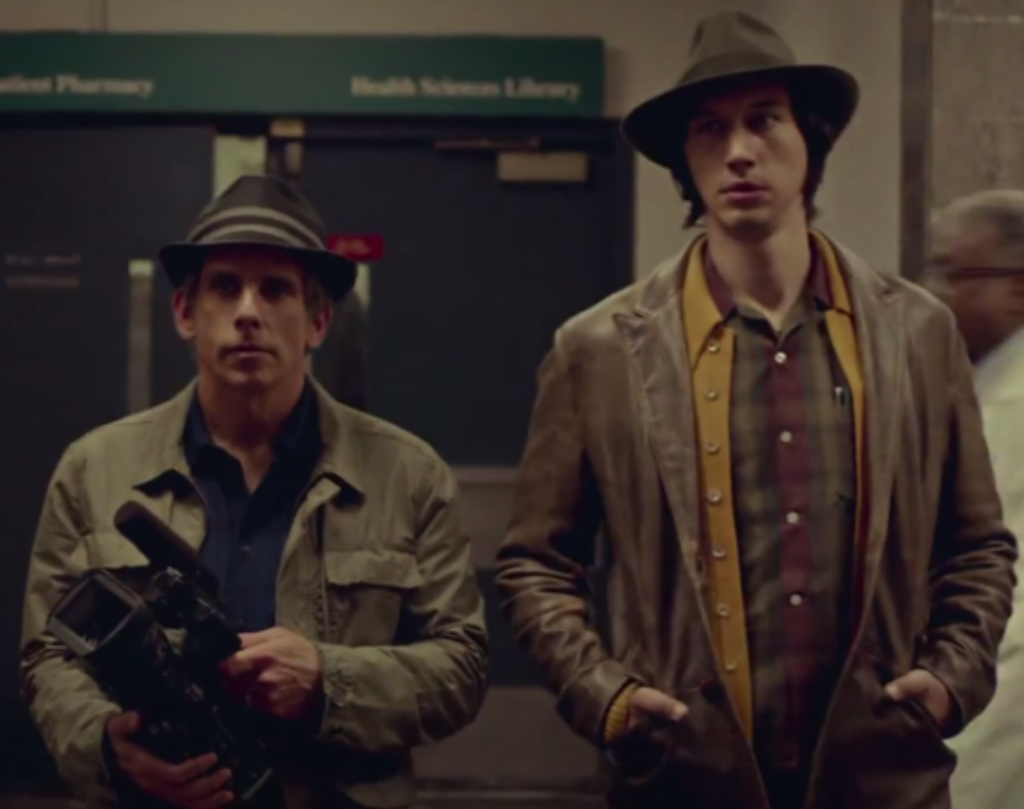
Never has this penchant for nostalgia been more baldly addressed than in Baumbach’s latest, “While We’re Young.” It is about the friendship between a forty-something married couple (Ben Stiller and Naomi Watts) who have sort of become what they wanted to be when they grew up (he’s a flailing documentarian and she’s the producer for her mega-successful documentarian father) and a twenty-something couple (Adam Driver and Amanda Seyfried) who disguise their enormous ambitions in a kaleidoscope of lo-fi hobbies, flea-market finds, New Age neologisms, and cultural appropriations that border on kleptomania. (She’s an almond-milk ice cream maker; he’s an aspiring documentarian who doesn’t distinguish between fact and fiction.) The film is saddled with an atonal third act that betrays the old-soul, new-millennium truths about disappointment and intimacy it seems intent on delivering. Before then, it is wonderful: loose-limbed, liquid, and glittering with the falsehood of eternal youth. Most tellingly, it’s aglow with references to other directors – micro-indie king Joe Swanberg, Paul Mazursky’s mid-century mise-en-scènes, Jonathan Demme’s gleefully teeming urban tableaus, and, of course, the glib-versus-glum morality play of Allen’s “Crimes and Misdemeanors,” itself partly about New York documentarians. Continue Reading →

"All, everything I understand, I understand only because I love."
― Leo Tolstoy