
Archive | Film Matters

The Timeless Blueprint of ‘Selma’

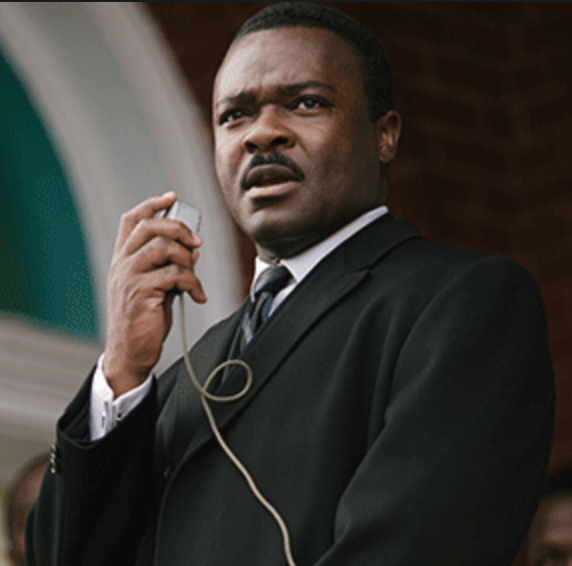
I have seen “Selma,” Ava DuVernay’s remarkable portrait of Martin Luther King Jr. and the three Alabama marches that inspired the 1965 Voting Rights Act, at two press screenings. The first took place in November, and I wept so copiously that I felt it my duty to see the film again in order to write about it objectively.

The second screening was held in mid-December. Common was still rapping, “That’s why we walk through Ferguson with our hands up” over the closing credits as I emerged into a Times Square filled with protestors. Some were silently standing in front of the police station; others were holding signs reading “I Can’t Breathe,” a reference to Eric Garner’s final words as he was choked to death by a cop. For a minute I felt like I was in the film itself, and that’s when I got it: There’s no objective way to see “Selma,” and that’s how it should be. King may have prescribed peaceful protest but he also stated adamantly that there is no neutrality when it comes to the issue of civil rights.

The only man from the twentieth century who has an American federal holiday named after him, Martin Luther King Jr. is almost inarguably our country’s most influential civil rights leader to date. Yet, as improbable as it may seem, “Selma” is the first feature-length film ever made about him. Wisely, DuVernay and screenwriter Paul Webb don’t compensate by covering the entire arc of King’s life. Instead, they pick up right where a more traditional King biopic might have ended: when awards have already been bestowed but important work is left to be done. Continue Reading →


All Dressed Up (NY Film Critics Circle Awards)

Near the end of the New York Film Critics Circle Awards on Monday, January 5, Patricia Arquette could be found outside, bundled up in a winter coat and talking to friends who were huddled over their cigarettes. When asked if she found it difficult as a performer to socialize with reviewers of her work, she burst out laughing, her adorably crooked teeth flashing. “You’d think so,” she said. “But it’s actually lovely.”

Earlier in the week, the existence of critics’ awards had generated some online debate, especially after the National Society of Film Critics had deemed Jean-Luc Godard’s “Goodbye to Language” the year’s best picture – a selection that some deemed deliberately obscure. “I find the opinions of individual critics infinitely more interesting than their collective choices,” tweeted New York Times co-chief film critic A.O. Scott. “Voting is the opposite of criticism.” RogerEbert.com editor in chief Matt Zoller Seitz had chimed in, tweeting that one year he’d gone on a “crusade to abolish the [NY Film Critics Circle] awards dinner.”

Seitz, though not a voter in the 2014 awards, was in attendance at Monday’s dinner anyway, which speaks volumes. Given the cross purposes at which reviewers and filmmakers often find themselves during the rest of the year, it may be awkward to socialize for an evening. But it’s also quite fun. Continue Reading →

Short Ribs

Though peevish the few times I ever met him (to be fair, press conferences would bring out the crank in Ghandi), Martin Short has a wide reputation for being one of the kindest and most genuine men in Hollywood. Certainly his warm and witty memoir I Must Say justifies that reputation, with wonderfully insidery details of the North American comedy landscape from the ’70s through today. We’re talking stories about Gilda Radner (his first serious girlfriend), John Candy, John and Jim Belushi, Rick Moranis, Jan Hooks, Steve Martin, Alec Baldwin, Julia Louis-Dreyfus, Goldie Hawn, Larry David, Nora Ephron, Jerry Lewis, Billy Crystal, Will Ferrell, Dan Aykroyd, Elaine May, Carol Burnett, Jerry Lewis, Bernadette Peters, Christopher Guest, Bill Murray, Eugene Levy, Catherine O’Hara, Sammy Davis Jr., Diane Keaton, Tom Hanks (back when he was funny), and Andrea Martin–as well as the origins of every member of his (rubber) band of stock characters. The little girl in me who hijacked every elementary school sleepover with an Ed Grimley impression is especially delighted. Short’s greatest charm is a generosity that extends to himself but doesn’t preclude others. The book is replete with the kind of vignettes you always hope take place in Hollywood, even while stories of film producers snorting coke off B movie starlet’s asses seem more likely. An example:

Mike Nichols was as funny in person as he was on TV in the 1960s. A few years ago David Geffen invited us both onto his spectacular yacht, the Rising Sun. As we sat down to dinner one night, I took in the sight of all David’s guests–each one famous and accomplished–and decided to initiate a game called “Who Has Met Whom?” Surely at least one member of this crowd had met just about any great twentieth century figure you could think of. “Did anyone here ever meet Eleanor Roosevelt?”  Warren Beatty responded, “Actually, I met Eleanor Roosevelt.” From the far end of the table, Mike called out, “Did you fuck her?”

"All, everything I understand, I understand only because I love."
― Leo Tolstoy