
The Essential Stillness of ‘Love Is Strange’
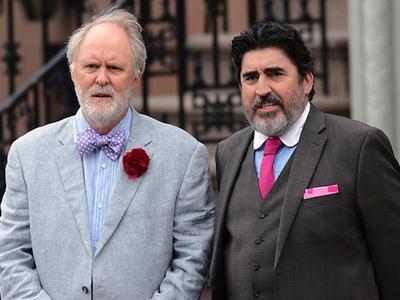 We Americans pretty much never shut up anymore. With all the technological advances of the last 20 years, there are virtually no moments left in which we have to sit and grapple with the sadness that can lurk in modern life. Only an increasingly rarified strain of cinema offers the stillness our days so sorely lack, and, at their best, such films allow us to channel ourselves with a quiet that we moviegoers crave more than we realize.
European filmmakers have always proved quite handy with quiescence; the confidence and depth it requires distinguishes such masters as Bergman, Fellini and Tati. Not surprisingly, Americans emulators have produced more varied results, as if we’re such a young nation that we’ve yet to stop fidgeting. (Woody Allen’s efforts in this area are especially awkward; his Bergman knockoffs are best forgotten.) Of today’s American directors, only Richard Linklater and Ira Sachs seem fully capable of burrowing into that cinematic silence which can yield old-soul lessons and pleasures, and I believe it’s no coincidence that their latest projects have proved the film events of the year so far. In “Boyhood,” Linklater slows us all down by making time itself his central character. Now, in “Love Is Strange,” Sachs has created a moving picture that looks and feels like a still life—a happier sort of “Scenes From a Marriage,” if that film were an enlivened oil painting featuring an older gay New York couple. Continue Reading →
Stieg Larsson with the Dragon Tattoo
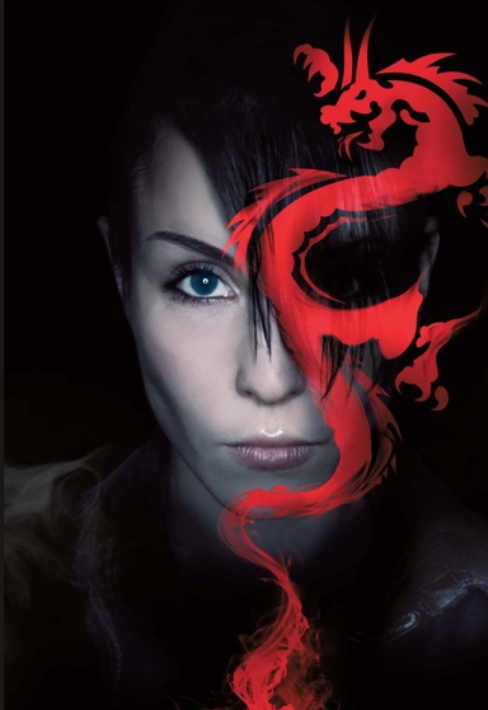 It’s been 10 years since Stieg Larsson’s untimely passing, and The Girl With the Dragon Tattoo author would have turned 60 last week had he lived. But while the world would be a better place if he had, the mythology of his own story – especially the fact that he died of a heart attack before the first volume of his best-selling trilogy was published – has only heightened the international impact of his blazingly anti-imperialist and pro-feminist thrillers. Given that he dedicated his life to exposing the violence, racism, and right-wing extremism lurking in his seemingly liberal home country of Sweden, I suspect he’d have considered his early demise a worthy sacrifice. In fact, he may even have anticipated it.
Certainly he packed an impressive amount of living into his fifty-year tenure on earth. Born in a Northern Sweden mining town, Stieg was raised by his grandparents after his father contracted arsenic poisoning from working at the local smelting plant. When his grandfather died at fifty of a heart attack (sound familiar?), Stieg joined his parents in the bigger city of Umeå, whose urban inequities incensed him even at the ripe old age of nine. At age fifteen, he witnessed a gang rape without intervening. Though he eventually asked the victim for her forgiveness, she refused. And thus are the makings of an anti-establishment literary superhero.
We could argue that everyone’s adulthood is a response to their seminal years but it seems particularly true of Larsson: The rape victim’s name was reportedly Lisbeth, which is the name he gave to the powerful, and powerfully broken, heroine of his best-selling novels; the original title for The Girl With the Dragon Tattoo was Men Who Hate Women; and he worked as a radical journalist and activist who trained female guerrillas in weaponry skills while he wrote novels at night. But it is those novels he wrote to unwind that have most avenged his early experiences. The Girl trilogy made him (posthumously) one of the most best-selling authors of the Aughts – which means that millions upon millions of people have hung on every word of the adventures of a punk-rock, anti-social, bisexual, survivor-savant, law-breaking woman warrior. Continue Reading →
The Me Decade
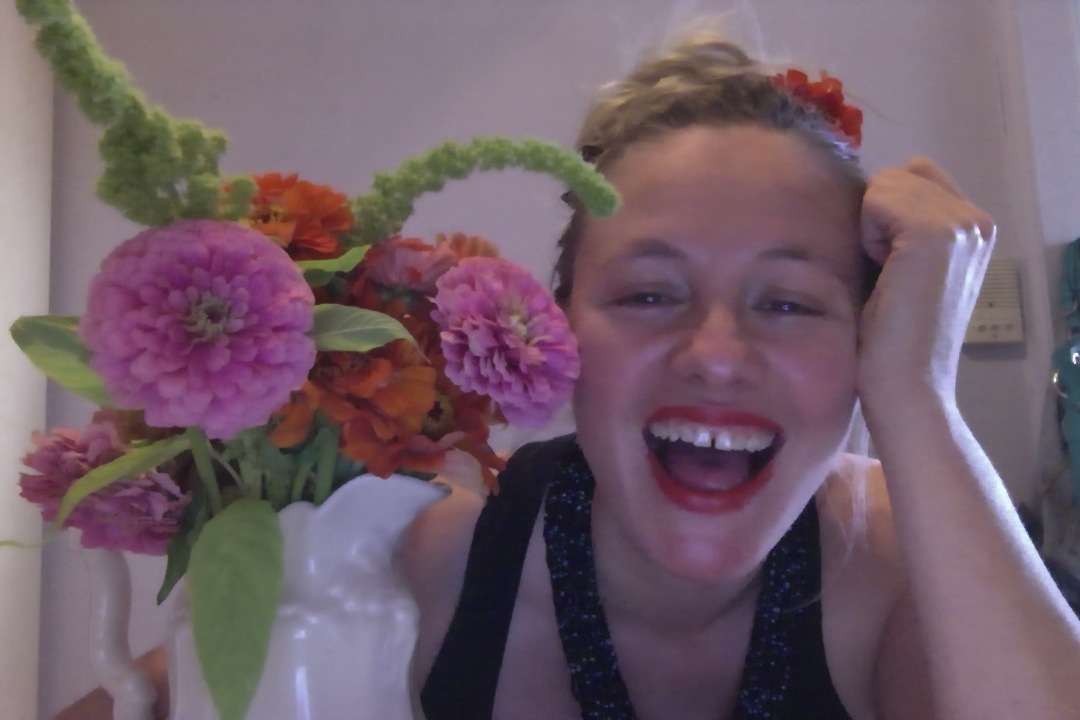 I was having one of those glorious Brooklyn Saturday mornings. I was all gussied up in my Brooklyn Saturday morning finest: a floor-length geometric Meg skirt; an enormous blue-beaded Senegalese necklace; sloppy silver Birkenstock knockoffs (Birkenstockoffs); dirty hair piled high with blue extensions and an orange zinnia; and a bright purple bra visible through my cropped tee. It was a punk-rock homage to the ’70s moms I’d wished were my own–the kind of outfit I really can’t wear to film screenings or Talking Pictures tapings or Ruby Intuition sessions. The kind of outfit in which I feel most myself.
So was I ever feeling grand as I buzzed through my Brooklyn Saturday morning routine. It had been a week of good, hard work in this Summer of Reckoning, and I was relishing a rare day off. I drank Americanos with my Muppet Critics; fetched produce and flowers at the Greenmarket; fed the birds and myself over at Red Hook Fairway; read my book about ’60s directors by the water. I drove the long way home, following the river with my left arm dangling out the window, Biggie and early Mariah pouring into the air. At a red light, I said—Admit it. You love your friends to bits but you are your best friend. You trust yourself. You always want to do the same things as you, you find the same things funny, you have the same values, you like the same music, and you want to be quiet at the same times. You may be impatient and messy and even occasionally imperious but you dig you. It was an odd but not unpleasant revelation. Knee-deep in my early-middle age, I finally appreciated my own company enough that I’d avoid others before I’d ever avoid myself.
To cement the moment, I smiled cheekily in the rearview mirror–hey, good-lookin’!–only to notice I was wearing a crazy-lady, half-lipsticked grin. The universe’s sense of humor being what it is, the world’s most beautiful man picked that moment to bike by, and as he gave me the world’s most beautiful eye-fucking, the light changed. Flustered, I stalled my car, and everyone behind me began honking. I had to laugh. I knew that, as my best friend, it was now my duty to make fun of myself–pride do goeth before a fall! I didn’t mind. I knew I still liked me.