
The Stellar Success of ‘TFIOS’: Now What?
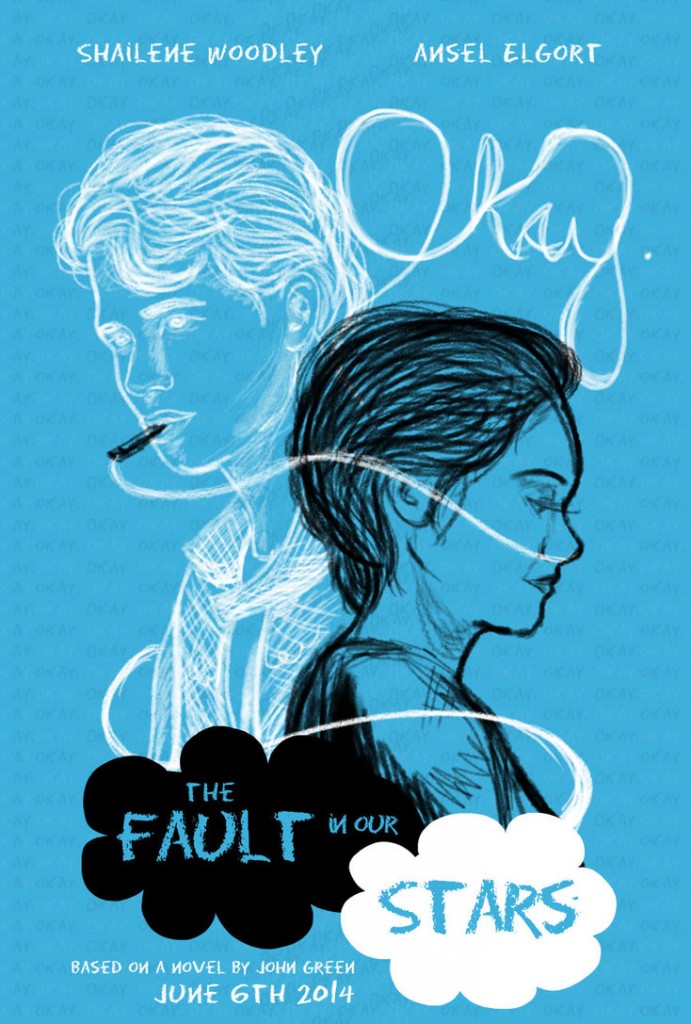 The following is a report originally published in Word and Film.
As The Fault in Our Stars heads into its second weekend of release, it remains to be seen if it will emerge as one of the summer’s biggest blockbusters. Either way, though, it’s safe to say the adaptation of the popular young adult novel is a wild success. Pulling in nearly $50 million its opening weekend, it outstripped even optimistic box office predictions, not to mention The Edge of Tomorrow, the Tom Cruise sci-fi action movie that opened the same day. That’s right: This little weepie about two teens with cancer knocked a Tom Cruise movie out of first place at the box office. (Actually, the Angelina Jolie vehicle Maleficent also beat it out.) What’s more, “TFIOS” cost only $12 million to make, in contrast to the $175 million it cost to make “Edge.” And what’s even more, given its groundswell of support, “TFIOS” required a marketing budget of less than half of what movie studio 20th Century Fox usually spends to publicize a summer film. The profit margin is huge.
Granted, that’s a whole lot of business blather. But in Hollywood, money talks. And the big question now is whether the success of “TFIOS” will change what we can expect in the multiplexes in the years to come. As veteran Hollywood reporter Anne Thompson has observed, mid-range films — ones with budgets between $5 and 100 million — aren’t getting made anymore. (Annie Hall would have been made as an independent film today.) We’re all acquainted with what’s being produced instead: superhero and action movies galore. Sure, fantasy YA has already secured its position on the marquee; the massive success of such franchises as “Twilight,” “The Hunger Games,” and, most recently, “Divergent” has made sure of that. But given how much money “TFIOS” cleared, might big movie studios be ready to adapt other “grounded” (non-fantasy) YA novels? And — the mind reels — might it be ready to put more money behind grounded YA novels that star females? (Indiewire’s Inkoo Kang reports that, of the 100 highest-earning movies of 2013, movies with a female protagonist earned twenty percent more on average than movies with a male protagonist.) Continue Reading →
‘Violette’ Is No Bed of Roses
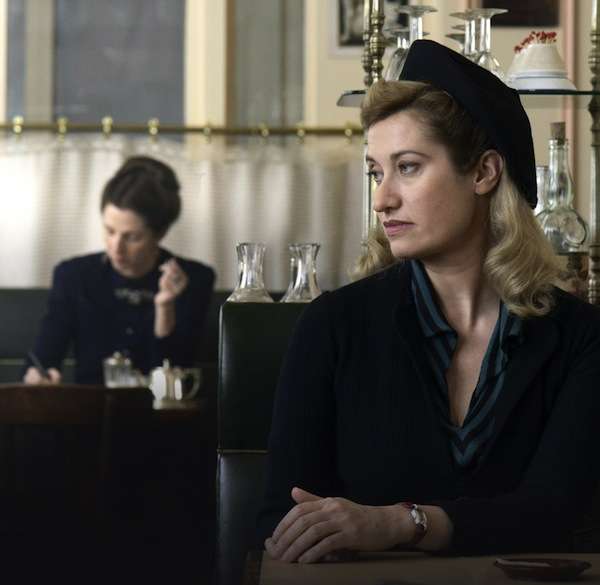 The following is a review originally published in Word and Film.
Violette, about French author Violette Leduc’s quest for success, may be the ultimate literary love story: At core, it depicts how the creative process can be seen as a love affair, both with ourselves and with an imagined audience. It takes a lot of fortitude to sit still with the imagination – to trust that, if we hang in there, we may produce something worth sharing with the world. In this sense, Leduc, who throughout her career had the temerity to demand love for her controversial self-expression, was powerfully strong if also powerfully frustrating. Much like this movie.
To be clear, “frustrating” is putting it nicely. Radical self-exposure was Leduc’s strength in her writing but her weakness as a person, a fact that director/co-writer Martin Provost captures in excruciating detail. French actress Emmanuelle Devos channels Leduc’s inability to contain her rawest feelings – her jealousies, her resentments, her neediness – so effectively that the result is an almost unbearable character. Almost. A woman who won’t rest until she is wanted on her own terms may not be an easy story but it is an important one. Continue Reading →
The Church of Plato on a Rainy Afternoon
 Yesterday, my friend B and I were having a long talk at Chelsea’s Cafe Grumpy. Because it had just rained, we had the backyard to ourselves and were using that rare private outdoor space to discuss topics that basic NYC etiquette prevented us from inflicting upon others: healthy grieving, ethical dating, spiritually conscious fucking, the heteronormative construct known as marriage, the queasy fundamentalism known as atheism. We were going off. If you saw us through a window, you might have concluded we were on a date, and a good one at that. A man and a woman of roughly the same age, talking animatedly, not touching but paying close attention to each other. She in a sheath dress; he in a tweed jacket.
In the middle of our second coffee, a man poked his head into what by then felt like our turf. “Helen?” he called out tentatively and looked at me. Rather than shaking my head, I grinned, and he raised his eyebrows, mistaking my glee at not being Helen for interest. After a beat B began talking again, and the man—who was peaked but not bad-looking, with a lanky frame and a long, pale face that bore the scars of a rough adolescence—disappeared. A bit later, while standing on the bathroom line, I noticed him again, this time looming over a woman placing an order. She was wearing a brown shirt and what we used to call slacks when we were mocking our parents in the ’70s. The outfit was so drab that it took a minute to register her bright face and surprisingly good figure. “You have nothing that is dairy-free that also does not have nuts?” she was saying with a grave, almost scholarly precision as the barrista searched the pastry case. Continue Reading →