
Archive | Book Matters

The Grind of ‘Silence’

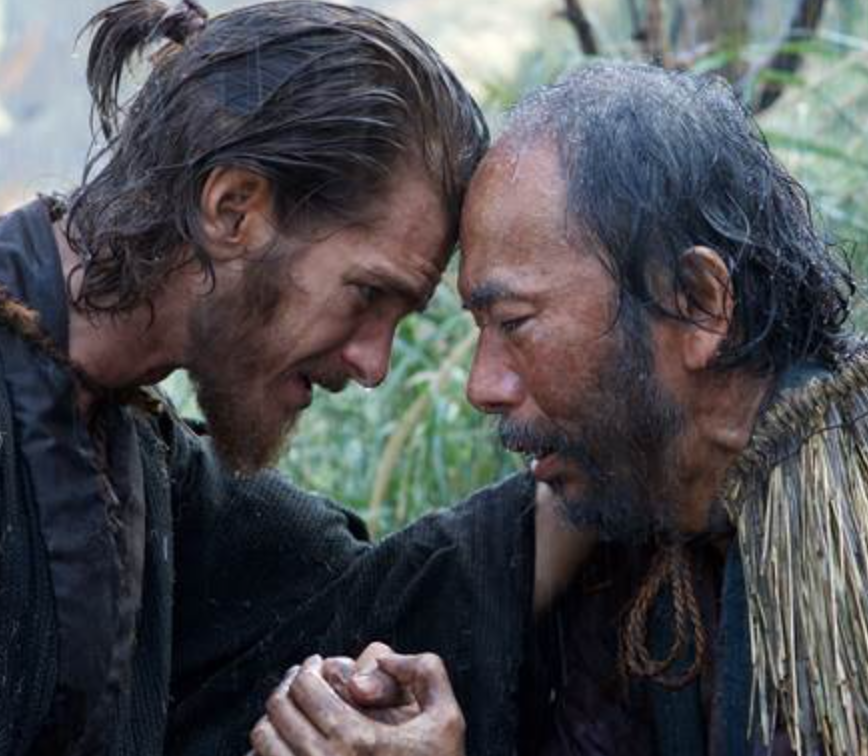
It has taken Martin Scorsese nearly thirty years to make “Silence,” his adaptation of Shusaku Endo’s 1966 award-winning novel about spirituality in the face of profound human suffering. In the intermediary, he has released a bevy of less weighty films, most recently “The Wolf of Wall Street,” which treads as far from “Silence” as Donald Trump does from Barack Obama. Yet what distinguishes the Academy Award-winning director’s work is in full effect in both films: a fascination with ritual coupled with an epic scale. True, “Silence” trains its lens on abstinence and self-sacrifice, but it does so with the over-the top commitment with which the “Wolf” stockbrokers snort drugs off hookers’ asses.

Adam Driver and Andrew Garfield play Fathers Garrpe and Rodrigues respectively, two Portuguese Jesuit missionaries searching for Father Ferreira (Liam Neeson), their mentor who has gone missing in Japan. It is the seventeenth century and Christians have been intent on spreading the good word in Asia, whether or not that word is welcome. The rumor is that Ferreira has absolved his faith and taken a Japanese name and wife, but the younger priests feel in their hearts that this is slander and that their teacher needs rescuing. So they set off on a slow boat, armed only with what they can carry on their backs – mostly Christian artifacts. Continue Reading →
‘All We Had’ Is Not That Bad

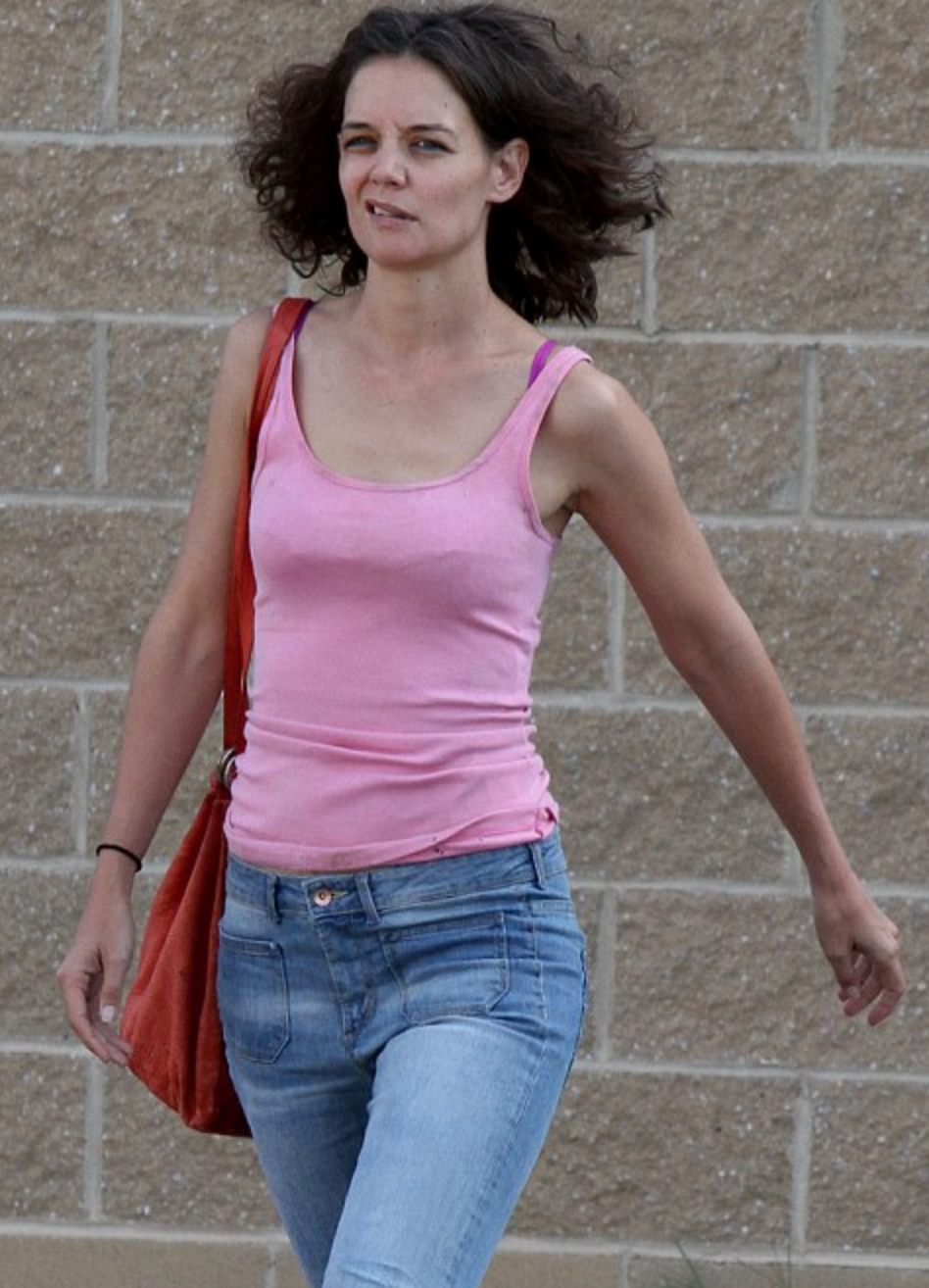
I’ve never really understood the Katie Holmes phenomenon. She was appropriately terrible on the ‘90s WB dramedy “Dawson’s Creek” as an ugly duckling who remained fascinatingly awkward upon blooming into a swan. Afterward, “Pieces of April” aside, she didn’t have much of a career to be eclipsed by her headline-grabbing, mid-aughts marriage to megastar Tom Cruise. In fact, until recently, Holmes’s biggest achievement seemed to be escaping the notoriously tenacious claws of Scientology by winning custody of daughter Suri after leaving her couch-jumper of a husband.

So it’s a headline unto itself that “All We Had,” the tabloid star’s directorial debut, is un-terrible. But faint praise aside, it would be an admirable effort for any first-time filmmaker, let alone a lady not exactly known for weathering lean times. An adaptation of Annie Weatherwax’s eponymous novel, it focuses on problem drinker Rita (Holmes) and her precocious fifteen-year-old daughter, Ruthie (Stefania Owen, “The Carrie Diaries”), as they navigate poverty and homelessness. Understated yet deeply felt, Holmes’ portrait of people who only have known hard times never strikes a false note, even when Josh Boone and Jill Killington’s adapted screenplay wanders too far afield. Continue Reading →

Who’s Reading Who: Identifying Race in Lit

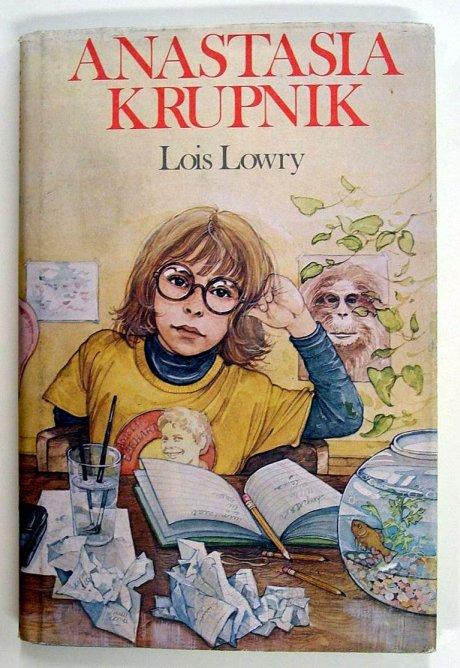
I recently reread a Young Adult series I loved when growing up. A more lighthearted offering from The Giver author Lois Lowry, these books focus on Anastasia Krupnik, a 1980s Newton, Massachusetts, tween whose mother is a painter, father is a poetry professor, and toddler brother already reads and speaks in carefully parsed sentences. Anastasia is kind, idiosyncratic, and funny, and she wrangles with moral dilemmas and the indignities of adolescence with a nerdy charisma that, at the ripe old age of (number redacted), I still find irresistible. Anastasia is also white.

I mention this fact because the only time race is mentioned in this book series is when someone is not white. The example that most stands out is the character of Henry in Anastasia’s Chosen Career, the seventh book in this series. Henry is a tall female student in the modeling course Anastasia takes while casting about for a career (age thirteen being high time to figure out what you’re doing with the rest of your life, apparently). A live-wire from the Boston neighborhood of Dorchester, Henry often says what Anastasia only thinks. She is also black. We know this because it’s specifically stated in her first appearance in the book, though she does not often speak in what could be coded as a black vernacular. Because Anastasia may not have many friends of color, Henry’s race may indeed be noteworthy to her although the two girls find everything about each other’s lives fascinating and foreign. But the minute that Henry is labeled black while other, presumably nonblack characters are not assigned a race, we suddenly realize Anastasia’s world is, by default, white. In that one swoop, the book’s Eden is destroyed, and readers are denied a freedom of imagination as well as a freedom of identification. Continue Reading →

"All, everything I understand, I understand only because I love."
― Leo Tolstoy