
Archive | Essays

Casting Season 2 of ‘True Detective’

Ever since the season 1 finale of True Detective, HBO’s Louisiana occult mystery series, tongues have been wagging about what season 2 will entail—even though, to date, a second season has yet to be confirmed. (Show creator Nic Pizzolatto reports he is writing one now but that HBO has yet to pick it up.) And ever since it was announced that season 1 stars Matthew McConaughey and Woody Harrelson would not be returning, even more tongues have been wagging about who should take their place.

So far, all Pizzolatto has revealed about a next season is that it would focus on “hard women, bad men, and the secret occult history of the United States transportation system.” Rumors abound that Brad Pitt will join the cast but the series creator has only said “who we cast and what their schedule is will likely determine at least some part of scheduling, and scheduling will determine at least some part of casting.” (Such labyrinthine answers makes us wonder if Pizzolatto used himself as the model for McConaughey’s philosopher-detective Rust Cohle.) If history is any predictor, chances are good that the new True Detectives will be men, but a quickly deleted tweet from the show runner suggests at least one lead might be a woman. One thing is for sure: Intriguing possibilities abound. For a breakdown of my dream team, go here.
‘Hateship Loveship,’ a Study in Earnestness

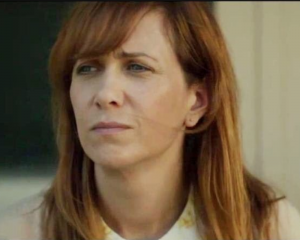
Hateship Loveship, starring Kristen Wiig, is far less blasé than the Alice Munro story on which it’s based. An excerpt from my Word and Film review :

We get the sense Munroe as narrator skims over the details of how a love match is made not out of prudery so much as a distaste for the obviousness of the whole business. “A woman not to be deterred, a man who’s lost his way? Eh, you do the math,” she seems to be saying, airily waving a rough-knuckled hand. In contrast, the film “Hateship Loveship” is a study in earnestness. To some degree this is a function of our times. The story has been updated to the contemporary Midwest from mid-20th century Canada, when stricter social codes were bound to engender subversiveness. 

Six Reasons Why It Had To Be Kevin Bacon

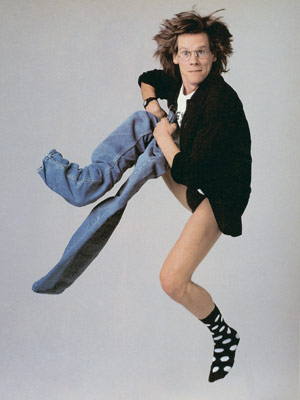
It’s been twenty years this spring since three Albright College students invented “Six Degrees of Kevin Bacon,” and the game is still going strong. And why not? Its premise — that anyone in the movie business could be linked to Bacon in six or less steps — is brilliant in its snarky simplicity. And with the advent of such websites as IMDB.com, it’s only become simpler. But why Kevin Bacon? Sure, in 1994 he declared to the now-defunct Premiere magazine that he’d “worked with everybody in Hollywood or someone who’s worked with them.” But even if he hadn’t made that claim, it’s hard to imagine this game built around any other ubiquitous actor. “Six Degrees of Toni Collette?” Ho hum. “Six Degrees of James Franco?” Way too meta. “Six Degrees of Woody Harrelson?” Yikes. No, it had to be Bacon, a man as appealing and accessible as the foodstuff that shares his name.  For Word and Film, I outline six reasons why We Need To Talk About Kevin.

"All, everything I understand, I understand only because I love."
― Leo Tolstoy