

Archive | Past Matters

A True Siren: Illeana Douglas

Illeana Douglas may be best known for her work in such edgy fare as “The Larry Sanders Show” and  Allison Anders’s “Grace of My Heart” but she also is a true scion of Old Hollywood. Her grandfather was the multiple Oscar-winning actor Melvyn Douglas and she has counted among her friends such film luminaries as Marlon Brando and Martin Scorsese, with whom she had a relationship for ten years. Now she’s penned a memoir, I Blame Dennis Hopper: And Other Stories From a Life Lived In and Out of the Movies, that doubles as a series of profiles of some key Tinseltown figures.

LISA ROSMAN: Tell us about the title. “I Blame Dennis Hopper.” It’s so promising!

ILLEANA DOUGLAS: Well, it’s the running gag in my life. My parents saw “Easy Rider” and were so affected that they started a commune and began living off the land. As I grew up, I realized that not only did that movie directly change my life but it changed so many lives across America. Not just young people’s. Middle class, middle-aged people’s, too. To me, that’s the power of film. Later on, I got to meet Dennis Hopper and I said, “Thanks for ruining my life. You ruined a lot of people’s lives.” He was like, “Sorry.” It’s very sad he passed away because this was something I really wanted to explore in a documentary. He was talking about freedom, man, and a lot of people resonated with that. Continue Reading →
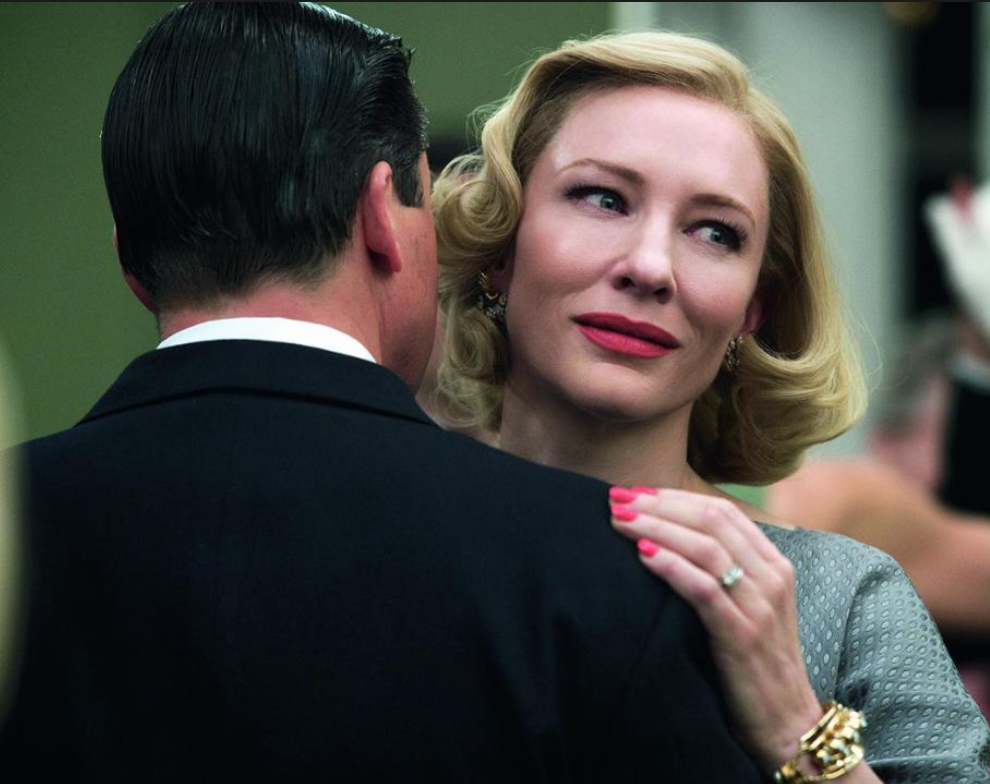
The Courage of Intimacy: ‘Carol’

Walking out of “Carol,” director Todd Haynes’s newest film, I had to laugh about our need to sneer at the past no matter how much we fetishize it. Progress is elliptical, not linear, though the LGBT community can be forgiven for temporarily forgetting this fact. This year alone we’ve achieved civil rights inconceivable only decades before–when AIDS patients were treated by the government as if they’d earned their fate, and simply being gay could deny us of our legal right to work, live, find shelter, and, of course, love.

Amid this unprecedented groundswell of mainstream acceptance comes Haynes’s adaptation of Patricia Highsmith’s 1952 eponymous novel about a love affair between the titular married socialite and Therese, a shopgirl twenty years her junior. Originally published under a pseudonym and with a different title, the book not only reflects the obstacles facing a lesbian couple in the mid-twentieth century but the holistic confusion facing any woman coming of age – when the world claims her body and sexuality before she’s grown comfortable with them herself. Students of queer and feminist literature have long prized the novel’s precision and defiant optimism, and for good reason. It is a quiet tour de force that remains radical today. Continue Reading →

The Church of Color

For a while in my twenties, I only could wear beige, white, and black. I was very sick at the time, and in my long recovery, I couldn’t handle the strain of real color. This, in retrospect, is how I know that I was gravely ill, for color is and always has been very important to me.

My abstinence from color had happened once before. That time, I lost my ability to perceive color all together, and it was that loss, coupled with a harbinger of the symptoms that later capsized me, that forced me to accept that I had to separate from my family of origin. The metaphorical and literal often blur dangerously on the blueprint of my body. I suspect this stems from the lifted veil that I take for granted.

By nature I am highly selective about the colors with which I surround myself. The off-tones of the early 1990s hurt my eyes, for example. Those mustards and greyish purples always seemed so joyless–sanctimonious, even, as if it were not PC to shine. (I never viewed a friend who got married in a brown dress the same way again.) In my mid-teens, I was known as “the green girl,” for I liked to wear as many shades of green as possible. It wasn’t an affectation. The green made me feel hopeful and connected to something bigger than myself. Alice May, my mother’s mother, was the only one who understood. She adored green, which she said was the color of life and love. She had a winter green couch that was my favorite place to read. Continue Reading →

"All, everything I understand, I understand only because I love."
― Leo Tolstoy